
Violence Falls, But Political Attacks Surge
By Vonnie Frady • December 11, 2025

A Decline in Mass Killings Masks a Surge in Politically Motivated Violence
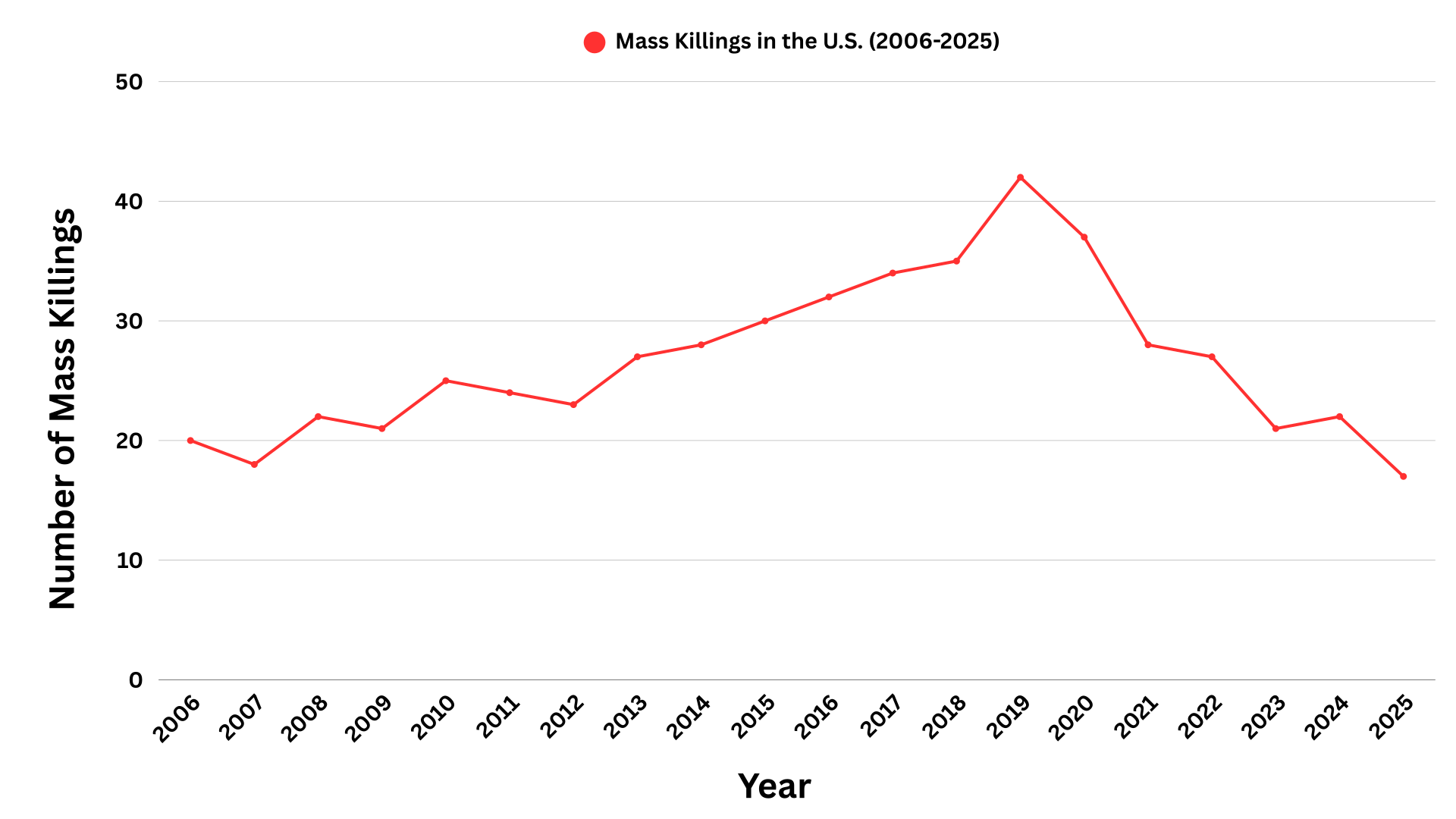
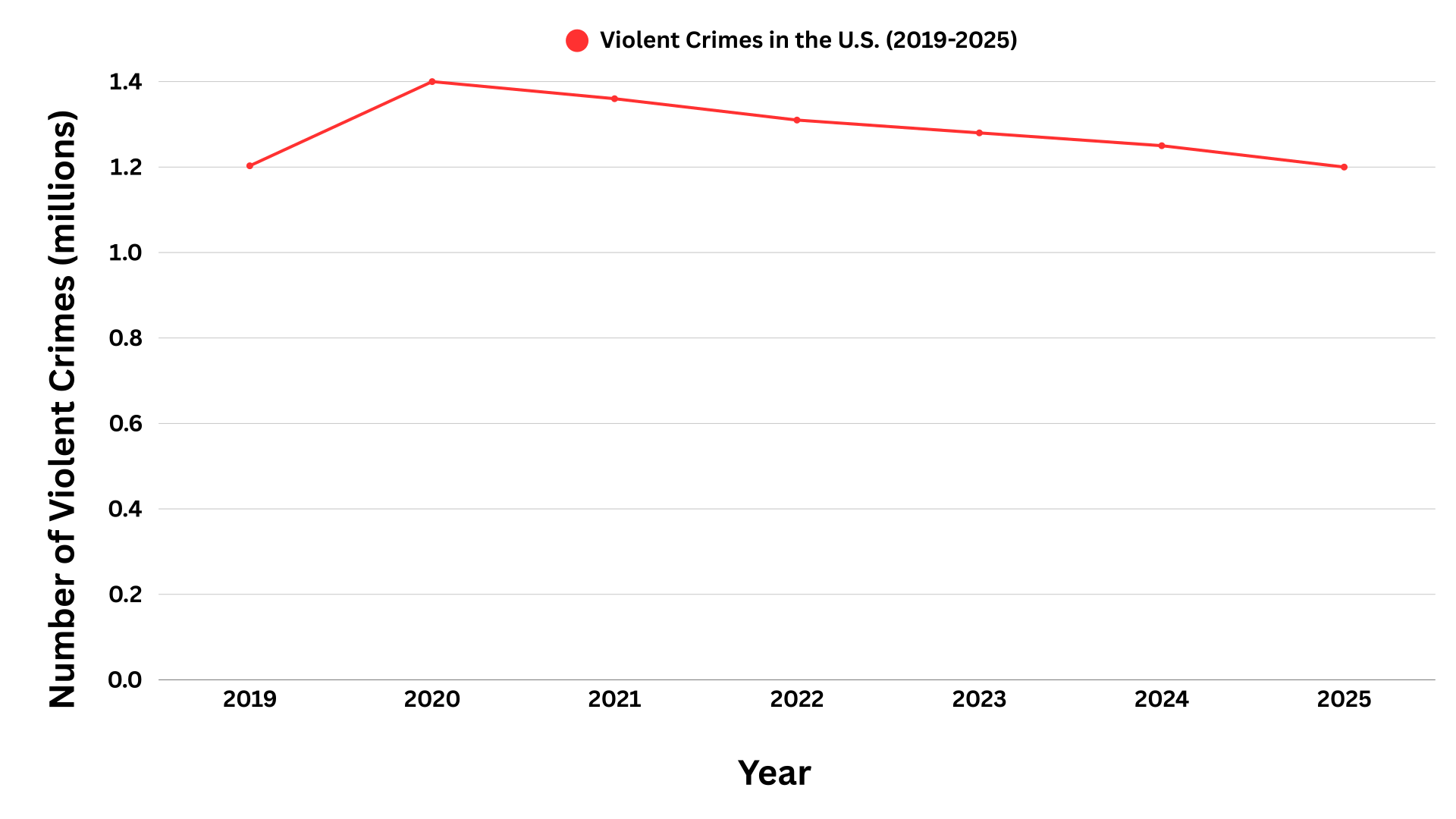
This year, the United States is thankfully trending downward in overall violence and mass killings. According to the AP/USA TODAY/Northeastern database, there have been 17 mass killings in 2025, the lowest number since tracking began in 2006. That represents roughly a 24% drop from 2024 and about a 20% drop from 2023, and nearly a 60% decrease from the 2019 peak, when more than 40 such events were recorded. Homicides and violent crime nationwide are following a similar trajectory, continuing to fall after the COVID-era spike, putting the national murder rate on track for the lowest levels in decades.
This year, the nation is experiencing a rare moment of relief from the unrelenting surge of the past decade. Detailed numbers make the decline clear and measurable, offering a hopeful signal that interventions, policing, and societal shifts are having a positive effect on general crime trends.
The Decline in Overall Violence
To understand the significance of this year’s numbers, it’s important to place them in context. In 2019, the U.S. recorded over 40 mass killings, marking the highest point in recent history. Violent crime spiked during the COVID-19 pandemic, with lockdowns, economic stress, and social disruption supposedly contributing to a sharp rise in homicides. Since then, there has been a consistent decline in overall violent crime, a trend that continues in 2025.
Homicides, aggravated assaults, and other forms of violent crime have all shown measurable declines. Analysts point to a combination of factors: increased law enforcement efficiency, targeted crime prevention programs, and even demographic shifts in urban areas. While no drop in violent crime is ever “enough,” the numbers indicate that we are moving in the right direction.
- Mass killings (4+ fatalities excluding the perpetrator): 17 in 2025, down from 22 in 2024 and 21 in 2023
- Year-over-year decrease: ~24% from 2024, ~20% from 2023
- Homicides: Falling consistently nationwide, with rates approaching the lowest in decades
This decline is welcome news. For years, headlines about shootings and mass killings dominated media cycles. While any loss of life is tragic, the overall trend is finally moving toward lower violence.
A New Trend: Politically Motivated Violence on the Rise
Typically, when overall violent crime decreases, politically motivated violence follows a similar pattern. Historically, as society stabilizes and murders drop, attacks carried out for ideological reasons also decline. Not this year.
In 2025, politically motivated violence — attacks, plots, and murders driven by ideology — has increased sharply, breaking the usual correlation.
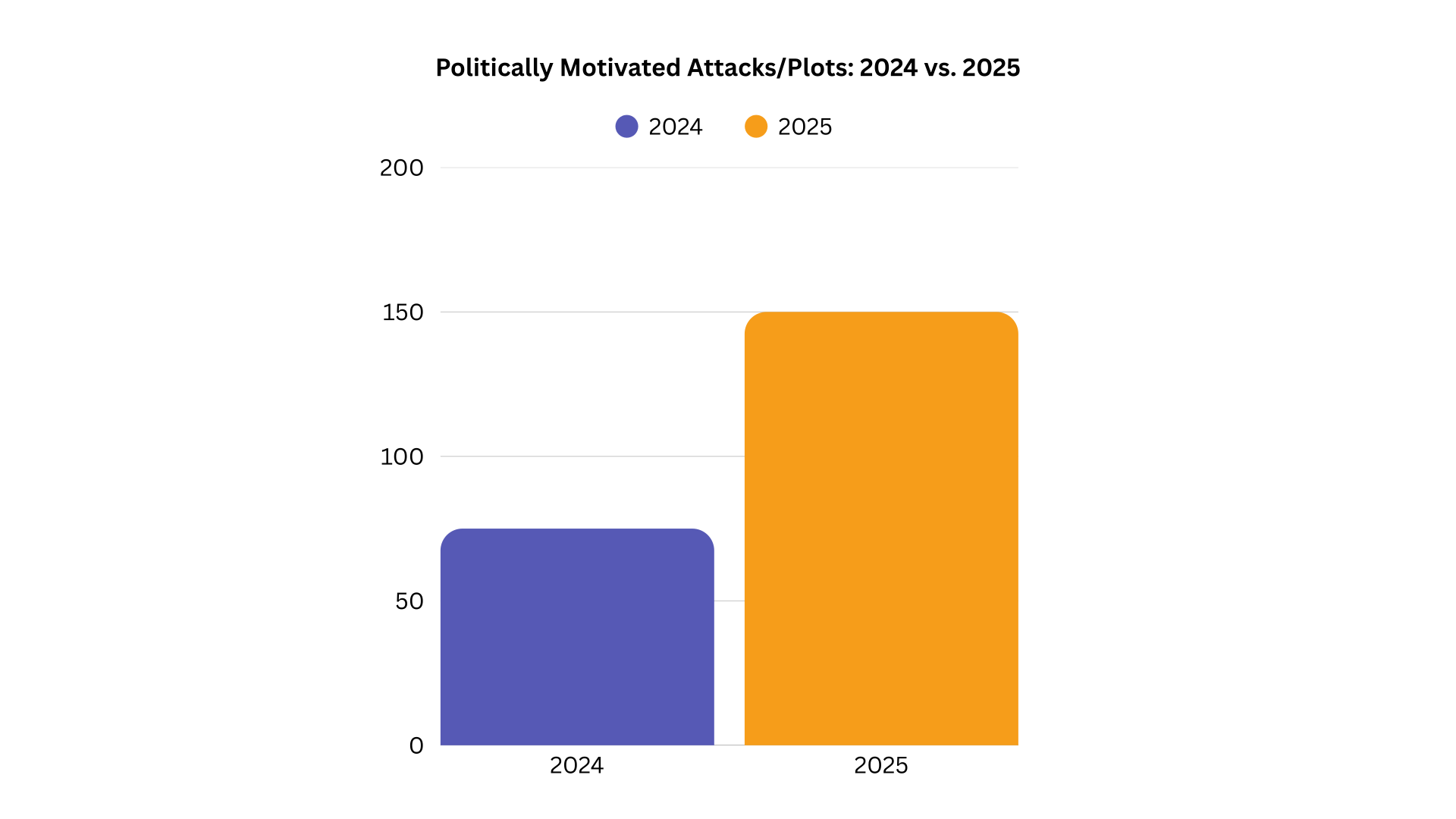
- Attacks and plots: ~150 politically motivated attacks recorded in the first half of 2025, nearly double the ~75 attacks during the same period in 2024
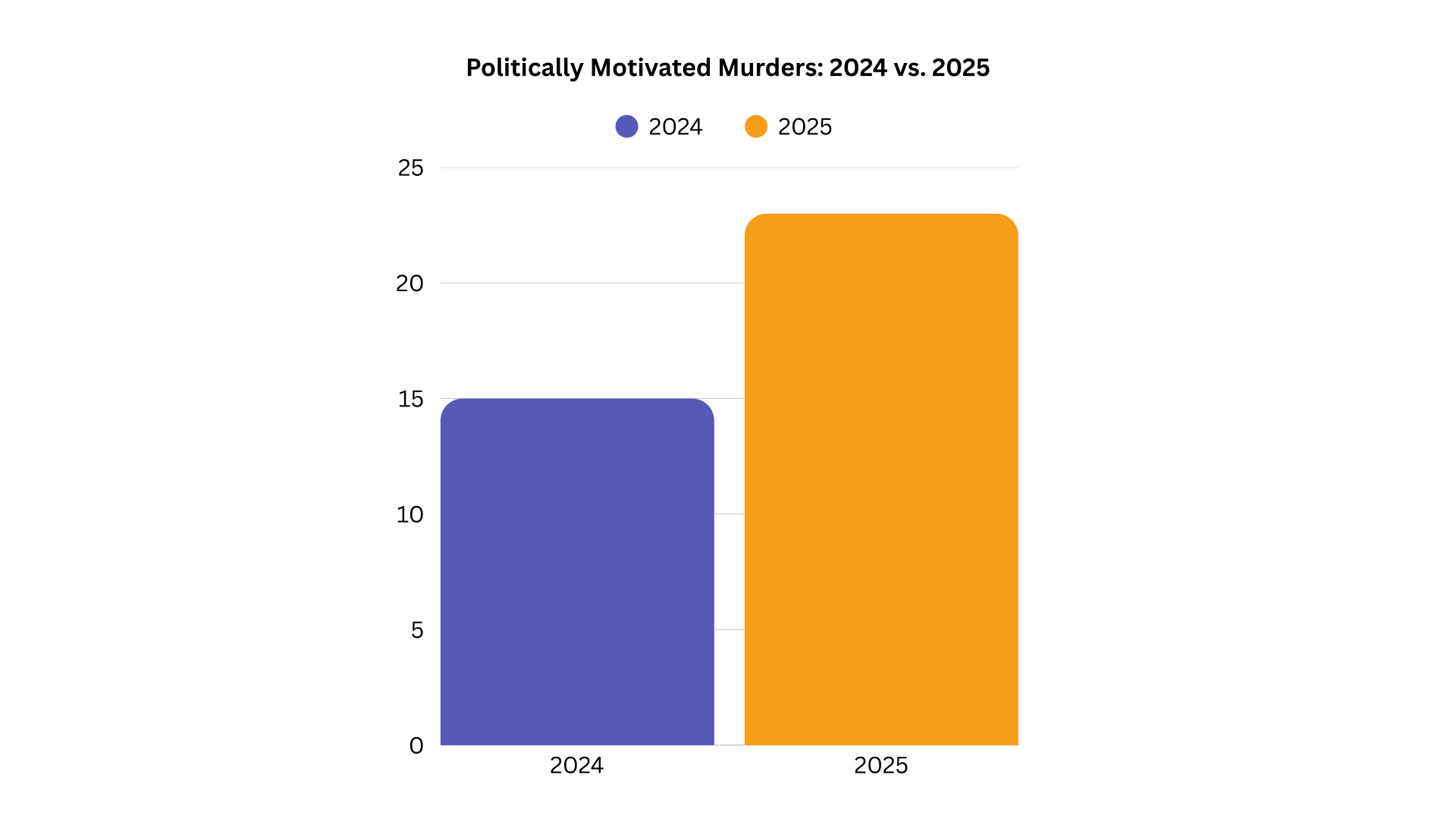
- Politically motivated murders: 23 reported so far in 2025
The data alone is alarming. For the first time in recent history, the usual “safety buffer” created by declining overall violence does not extend to politically motivated violence. Something is different.
Why Is Political Violence Rising While Overall Violence Falls?
The rise in politically motivated attacks is not happening in a vacuum. Multiple factors are converging to create a permissive environment for violence rooted in ideology:
- Ideological Extremism: Political polarization has intensified to levels not seen in decades. Extremist groups, both organized and informal, are openly encouraging aggression toward perceived enemies. Online forums, social media platforms, and even political rhetoric have amplified these voices.
- Targeting Government Officials: Many attacks in 2025 have targeted public officials or government institutions. While these attacks are small in absolute numbers, they carry symbolic significance and send a message to others who may be ideologically motivated.
- Media Amplification: Coverage of political disputes and labeling opponents as existential threats can encourage copycat incidents. The more attention these attacks receive, the more likely others may be inspired to commit similar acts.
- Political Polarization: This is perhaps the most insidious factor. When political discourse becomes about demonizing opponents, it lowers the societal barriers against violence. People begin to feel that extreme measures are justified.
The combination of these factors creates a unique environment in which politically motivated violence can rise even as general violent crime falls.
The Role of Left-Wing Political Violence
In analyzing the patterns of 2025, it is clear that much of the rise in politically motivated violence has been perpetrated by the left. This includes attacks inspired by ideological extremism, targeting of political opponents, and attacks on public officials. There is a growing permissive structure — cultural, media-driven, and political — that allows or even encourages these behaviors.
We are not exaggerating. When someone is labeled a “Nazi” or “Hitler” in mainstream discourse, and that language is amplified across social platforms, it creates a dangerous perception: that violence against the labeled individual is somehow justified. The statistics prove the danger: the sharp rise in attacks and murders reflects a tangible, measurable outcome of political rhetoric.
Breaking the Historical Pattern
Historically, politically motivated violence tracks overall crime trends. If murders go down, politically motivated murders generally follow. But 2025 breaks this pattern. While the rest of society is benefiting from a decline in overall violence, political violence is accelerating.
This divergence is significant. It signals a breakdown in traditional social norms that once constrained politically motivated acts. We are no longer seeing a natural correlation between decreasing crime and decreasing political violence. Instead, we see a rise in attacks driven by ideology, rhetoric, and perceived permission structures.
The Numbers Are Clear
- Mass killings: 17 in 2025, down 24% from 2024
- Overall homicide rate: Falling nationwide
- Political attacks/plots (first half 2025): ~150, nearly double the first half of 2024
- Politically motivated murders (2025 so far): 23 deaths
The data paints a picture of a society that is safer overall but increasingly dangerous for those targeted by ideological extremism.
The Dangers of Rhetoric
The 2025 trend is a stark warning: words have consequences. Political leaders, media figures, and cultural influencers who label opponents with extreme terms or frame them as existential threats contribute to an environment in which politically motivated violence is not only possible but increasingly likely.
The combination of ideological extremism, targeting government officials, media amplification, and political polarization has created a perfect storm. It’s no longer safe to assume that declining general crime will protect against politically motivated attacks.
A Call for Awareness
For Christians and concerned citizens, this is a time to speak the truth clearly while understanding the real consequences of rhetoric and ideology. The rise in politically motivated violence is not abstract; it is measurable, deadly, and connected to a cultural climate that normalizes aggression toward perceived enemies.
We must be vigilant. We must acknowledge the improvement in overall violence — mass killings and general crime are down — but we must not ignore the dangerous rise in politically motivated attacks. 2025 is teaching us a difficult lesson: while society can improve, ideological extremism can still thrive if we do not confront it honestly and decisively.
Don’t Just Scroll—Stay Rooted in Truth.
Get weekly insights that help you think biblically and live faithfully.
Contact Us
Thank you for subscribing!
Please try again later.
SHARE THIS